
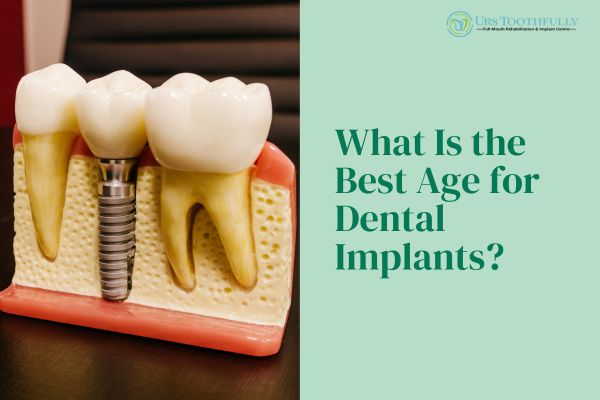
If you are missing one tooth or several, you have probably asked yourself the same question that comes up in almost every consultation at Ur’s Toothfully Full Mouth Rehabilitation & Implant Centre, a dental implant clinic in Kolkata: “Am I the right age for dental implants?” It is a fair question. Age is an easy number to hold onto, and it feels like it should matter.
Here is the short answer. There is no single best age for dental implants. What matters far more than the number of candles on your birthday cake is your bone health, your gum health, and your overall medical condition. A healthy 70 year old with strong jawbone density can be a better candidate than an unhealthy 35 year old with uncontrolled diabetes and bone loss. Dentists do not look at your date of birth. They look at your mouth and your health history.
That said, age does play a role at the two extremes, in childhood and adolescence on one end, and in advanced age with certain health conditions on the other. This guide walks you through everything you need to know about the ideal age for dental implants, the minimum age for dental implants, whether there is a maximum age for dental implants, and how dentists actually decide who is eligible.
Is There an Ideal Age for Dental Implants?
Most patients who ask about the ideal age for dental implants are really asking, “When will my implant have the best chance of success?” The honest answer is that success depends on biology, not birthdate. Implants remain one of the most reliable options for missing teeth replacement precisely because they replace the tooth root itself, not just the visible crown.
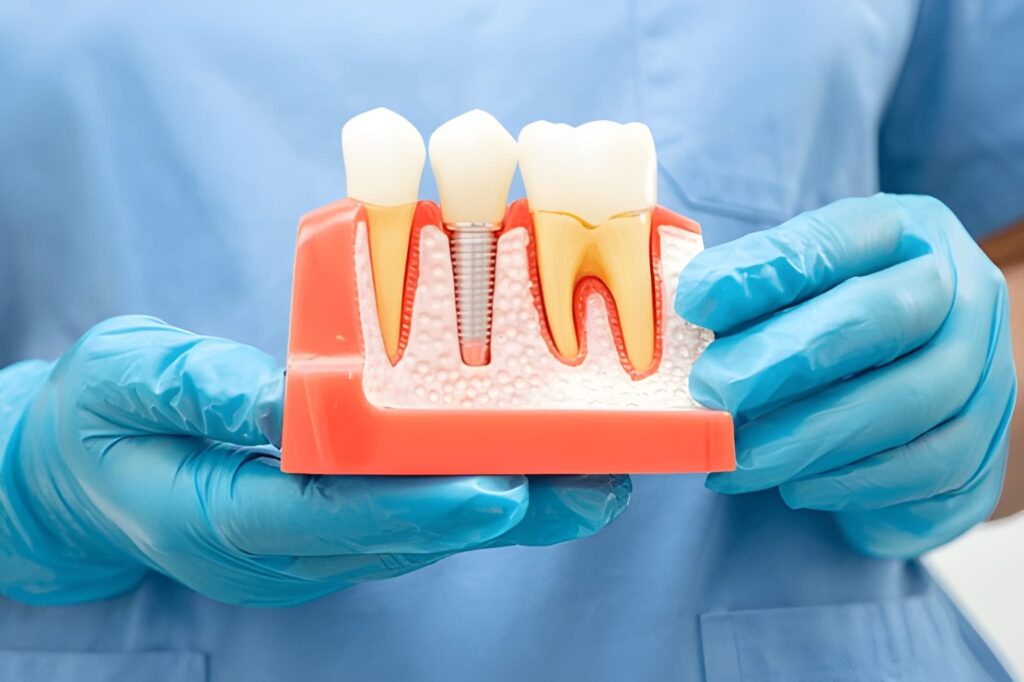
Dental implants work through a process called osseointegration, where the titanium implant post fuses with your jawbone over a period of a few months. For this fusion to happen predictably, three things need to be in place:
- The jawbone must be fully developed and stop growing
- The bone must have adequate density and volume to support the implant
- The patient must be in reasonably good general health, or have any conditions well managed
In practical terms, this means most adults from their late teens through their senior years are candidates, provided their jaw has finished developing and their health supports healing. There is a wide window, not a single ideal age.
That said, clinicians often note that adults between their late 20s and mid 60s tend to have the most straightforward healing process, simply because bone density and general health tend to be more favourable in this range. This is a tendency, not a rule. We have placed successful implants in patients well into their 80s, and we have also had to delay implants for younger patients in their 20s because of bone loss from long-term gum disease.
Minimum Age for Dental Implants: Why Jaw Growth Matters
This is where age genuinely becomes a clinical factor, not just a number.
Dental implants are anchored directly into the jawbone. If the jaw is still growing, placing a fixed implant too early can cause serious problems down the line. Unlike natural teeth or braces, an implant does not move as the jaw grows. Over time, a prematurely placed implant can appear to “sink” below the gumline, look out of alignment with neighbouring teeth, or affect the bite and facial development.
For this reason, the general clinical guideline for the minimum age for dental implants is:
- Girls: jaw growth is typically complete by around 15 to 17 years
- Boys: jaw growth typically continues until around 17 to 21 years
Most dentists prefer to wait until jaw growth is confirmed complete, which is usually verified through an X-ray or CBCT scan rather than age alone, since growth timelines vary from person to person.
What Happens If a Teenager Loses a Tooth Early?
Teenagers do lose permanent teeth, most often due to trauma from sports injuries, accidents, or congenital conditions where a tooth never develops. In these cases, a dentist will typically recommend a temporary solution until the jaw is fully mature, such as:
| Temporary Option | Purpose | Typical Duration |
| Removable partial denture | Fills the gap, easy to adjust as jaw grows | Until jaw growth is complete |
| Resin-bonded bridge (Maryland bridge) | Non-invasive, preserves space | Until jaw growth is complete |
| Space maintainer | Prevents adjacent teeth from shifting | Childhood to early teens |
Once growth is confirmed complete, usually verified with a dental X-ray, the permanent implant can be planned safely.
Can Young Adults Get Dental Implants?
Yes. Dental implants for young adults, typically defined as those in their early 20s through 30s, are extremely common and often ideal candidates. Once jaw growth is complete, age itself stops being a limiting factor and shifts almost entirely to bone health and lifestyle habits.
Young adults often make excellent implant candidates because:
- Bone density is frequently at its lifetime peak
- Healing capacity tends to be faster
- Fewer chronic health conditions are typically present
- Gum tissue is often healthier if oral hygiene has been consistent
Common reasons young adults need implants include a sports injury, a car accident, a congenitally missing tooth, or a tooth lost to untreated decay or a failed root canal. There is no reason to delay treatment simply because of a patient’s 20s or 30s age bracket. In fact, replacing a missing tooth early in adulthood helps prevent the bone loss, teeth shifting, and bite problems that tend to develop the longer a gap is left untreated.
Is There a Maximum Age for Dental Implants?
This is one of the most common misconceptions in dentistry. There is no maximum age for dental implants written into clinical guidelines. Chronological age alone does not disqualify anyone.
What actually matters at an older age is:
- Bone density and quality
- Healing capacity
- Management of chronic conditions such as diabetes or osteoporosis
- Ability to tolerate the minor surgical procedure
Research and long-term clinical data have repeatedly shown that implant success rates in healthy older adults are comparable to those in younger patients. Age is a number. Bone quality and overall health are the real determining factors.
Dental Implants for Seniors: 60+, 70+, and 80+
Dental implants for seniors are not just possible, they are often life changing. Tooth loss becomes more common with age due to decades of wear, past dental work, gum disease, or long-term denture use that gradually erodes the jawbone. Replacing missing teeth with implants can restore chewing function, improve nutrition, support facial structure, and eliminate the discomfort of ill-fitting dentures.
Here is a general breakdown of what to expect at different senior age brackets:
| Age Range | Common Considerations | Typical Outlook |
| 60s | Usually good bone density if no long-term tooth loss; manageable health conditions | Excellent candidates in most cases |
| 70s | May have some bone loss from denture wear; medications and health history reviewed closely | Good candidates with proper planning, may need bone grafting |
| 80s and beyond | Bone grafting more likely needed; healing time may be slightly longer; overall health assessment is critical | Candidacy assessed case by case, many succeed with careful planning |
For seniors who have worn dentures for many years, the jawbone often shrinks due to lack of stimulation, since natural tooth roots normally keep the bone active. This is why a thorough evaluation, often including a CBCT scan, is especially important for senior patients. In some cases, a bone graft or a different implant technique, such as All-on-4, is used to work around lower bone volume.
The key point for older patients is this: healthy seniors with well-managed health conditions are excellent implant candidates, and implants can meaningfully improve quality of life at any stage of retirement.
Who Is Eligible for Dental Implants? Key Criteria
Dental implant eligibility comes down to a combination of oral and general health factors rather than age. Before recommending dental implant treatment, dentists typically look for the following:
Oral health requirements:
- Sufficient jawbone density and volume to support the implant
- Healthy gums, free from active periodontal disease
- No untreated tooth decay or infection near the implant site
- Adequate space and proper bite alignment
General health requirements:
- Good overall health or well-controlled chronic conditions
- No conditions that seriously impair healing
- Non-smoker, or willing to reduce smoking around the time of surgery
- Realistic expectations about the treatment timeline and outcome
If any of these areas need improvement, most patients can still become eligible after some preparatory treatment, such as a bone graft, a deep cleaning, or better management of a medical condition.
Factors That Affect Implant Candidacy
Several factors matter far more than age when it comes to determining who is eligible for dental implants.
1. Bone Density and Volume
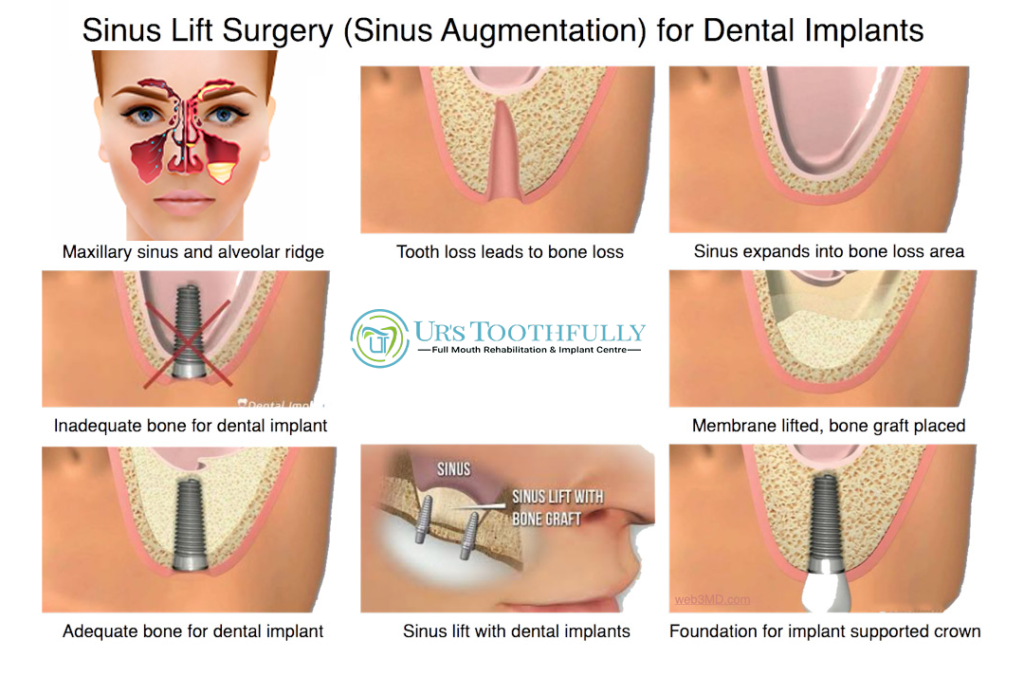
The jawbone needs enough height and width to anchor the implant securely. Bone loss commonly happens after long-term tooth loss, denture wear, or gum disease. When bone volume is insufficient, a bone graft can rebuild the area before or during implant placement.
2. Gum Health
Active gum disease, known as periodontitis, must be treated before implants are placed. Healthy gum tissue is essential because it supports and protects the implant long term, much like it does a natural tooth.
3. Smoking
Smoking is one of the biggest risk factors for implant failure at any age. It restricts blood flow to the gums and bone, slowing healing and increasing the risk of infection around the implant. Patients who smoke are still often eligible, but are usually advised to cut down or pause smoking around the surgical period to improve success rates.
4. Diabetes
Well-controlled diabetes generally does not prevent implant treatment. Uncontrolled or poorly managed diabetes, however, can slow healing and increase infection risk. Dentists typically ask for recent blood sugar readings, such as HbA1c levels, before planning surgery.
5. Osteoporosis and Bone Medications
Osteoporosis itself is not an automatic disqualifier, but certain medications used to treat it, particularly some bisphosphonates, can affect bone healing. This needs to be discussed openly with your dentist and sometimes your physician before treatment.
6. Other Medical Conditions
Autoimmune disorders, uncontrolled cardiovascular disease, or conditions requiring blood thinners may need coordination with your physician, but rarely rule out implants entirely.
Here is a quick summary table:
| Factor | Impact on Eligibility | Common Solution |
| Low bone density | May limit implant placement | Bone grafting or sinus lift |
| Active gum disease | Must be treated first | Deep cleaning, periodontal therapy |
| Smoking | Increases failure risk | Reduce or pause smoking around surgery |
| Uncontrolled diabetes | Slows healing | Medical management before treatment |
| Osteoporosis medication | May affect bone healing | Coordination with physician |
Benefits of Getting Implants at the Right Time
Delaying tooth replacement, at any age, tends to make future treatment more complex. Here is why timely treatment matters:
- Prevents bone loss: the jawbone needs stimulation from a tooth root to stay strong; a gap left untreated leads to gradual bone shrinkage
- Preserves facial structure: bone loss over time can make the face look sunken or aged prematurely
- Stops teeth from shifting: neighbouring teeth tend to drift into an empty gap, causing bite problems
- Restores chewing function early: avoids long-term strain on remaining teeth
- Simplifies future treatment: more bone available now generally means a more straightforward implant procedure later
- Improves confidence and quality of life: a stable, natural-looking replacement tooth at any age
How Dentists Assess Implant Eligibility
A responsible implant dentist never approves treatment based on a quick look. The assessment usually involves several steps:
1. Clinical Examination
The dentist examines your gums, remaining teeth, bite, and the general condition of your mouth. This includes checking for any signs of infection or active gum disease.
2. Medical History Review
A detailed review of your medical history, current medications, and any chronic conditions such as diabetes or osteoporosis helps identify any factors that need to be managed before surgery.
3. CBCT Scan (3D Imaging)
A Cone Beam CT scan gives a precise three-dimensional view of your jawbone, showing exact bone height, width, density, and the location of nerves and sinuses. This is one of the most important tools for planning implant placement accurately and safely.
4. Treatment Planning
Based on the clinical exam and imaging, the dentist creates a personalised plan, which may include preparatory steps like a bone graft or gum treatment, followed by the implant placement timeline and expected healing period.
This structured process is exactly why age alone is never used as a deciding factor. Two patients of the same age can have completely different bone and gum conditions, and the treatment plan reflects that individual reality. When choosing a dental implants in Kolkata provider, it is worth asking whether this kind of individualised, imaging-based assessment is standard practice, since it makes a real difference to long-term success.
Common Myths vs Facts About Age and Dental Implants
| Myth | Fact |
| There is a strict maximum age for dental implants | There is no upper age limit; healthy seniors are frequently excellent candidates |
| You must be a certain age to qualify | Eligibility depends on jaw development and health, not a fixed number |
| Implants are only for older adults | Young adults with a completed jaw and good bone health are common candidates |
| Elderly patients cannot heal from implant surgery | Healthy older adults generally heal well, similar to younger patients |
| Diabetes automatically disqualifies you | Well-controlled diabetes usually allows for successful implant treatment |
| Smokers can never get implants | Smokers can still qualify, though success rates improve with reduced smoking |
| Teenagers can get implants as soon as adult teeth come in | Dentists wait until jaw growth is fully complete, verified by X-ray |
| Bone loss means implants are impossible | Bone grafting can often restore enough volume for successful placement |
Frequently Asked Questions
1. What is the best age for dental implants?
There is no single best age. Dental implants are appropriate for most adults whose jaw has fully developed and who are in reasonably good general health, ranging from late teens through senior years.
2. What is the minimum age for dental implants?
The minimum age depends on jaw development rather than a fixed number. This is typically around 15 to 17 for girls and 17 to 21 for boys, confirmed through an X-ray showing growth is complete.
3. Is there a maximum age for dental implants?
No, there is no maximum age. Healthy older adults, including those in their 70s and 80s, can be excellent candidates provided their bone and overall health support the procedure.
4. Can young adults get dental implants?
Yes. Once jaw growth is complete, young adults in their 20s and 30s are often ideal candidates due to typically strong bone density and faster healing.
5. Are dental implants safe for seniors?
Yes. Implants are commonly and safely placed in seniors, often with excellent long-term success, provided any chronic health conditions are well managed.
6. Who is eligible for dental implants?
Eligibility depends on having adequate jawbone density, healthy gums, and overall good health or well-managed chronic conditions, rather than age.
7. Does diabetes affect dental implant eligibility?
Well-controlled diabetes usually does not prevent implant treatment. Poorly controlled diabetes can slow healing and may need to be managed first.
8. Can smokers get dental implants?
Smokers can still be eligible, though smoking increases the risk of implant failure. Reducing or pausing smoking around the surgical period improves outcomes.
9. What if I do not have enough jawbone for an implant?
A bone graft or sinus lift can often rebuild adequate bone volume before or during implant placement.
10. How do dentists decide if I am a candidate for implants?
Through a clinical exam, a review of your medical history, and a CBCT scan that maps your jawbone in detail, followed by a personalized treatment plan.
11. Do dental implants work differently for older versus younger patients?
The implant procedure itself is the same. Older patients may more often require a bone graft due to age-related bone loss, but the fundamental process and success rates are comparable when health is well managed.
12. Is it too late to get implants if I have worn dentures for years?
Not necessarily. Long-term denture wear can cause bone loss, but a thorough evaluation, sometimes with a bone graft, can often still make implants a viable option.
Conclusion
The best age for dental implants is not really about age at all. It is about whether your jaw has finished growing, whether your bone and gums are healthy enough to support the implant, and whether any medical conditions you have are well managed. Teenagers need to wait until jaw growth is complete. Young adults are frequently excellent candidates. Seniors in their 60s, 70s, and even 80s can and do get successful implants every day, as long as their overall health supports the procedure.
If you have been putting off treatment because you think you are too young, too old, or somehow past the ideal window, the real answer starts with an evaluation, not a birthday. At Ur’s Toothfully Full Mouth Rehabilitation & Implant Centre, one of the trusted names for dental implants in Kolkata, our team assesses each patient individually through a detailed clinical exam and CBCT imaging, so you know exactly where you stand and what your options are. Patients often ask us how to identify the best implantologist in Kolkata for their specific case, and our answer is always the same: look for a clinic that bases its recommendation on your bone health and medical history, not on your age alone.
Ready to find out if you are a candidate for dental implants? Book a consultation with our team to get a personalised assessment of your bone health, gum health, and eligibility, whatever your age.